Are my Hamstrings the Problem? Understanding Tightness and What to Do About It
Do you constantly feel like your hamstrings are tight no matter how much you stretch? You’re not alone. Hamstring tightness is one of the most common complaints we hear in the clinic, especially from those that sit a lot for work, are active in the gym or have a history of back and/or hip pain. Now, if we keep stretching and not getting the relief we are looking for, then maybe it’s because we haven’t truly figured out what is making the hamstrings tight or at least feel as if they’re tight. Let’s take a deeper dive!
What Are the Hamstrings?
The hamstrings are made up of a set of three muscles: the biceps femoris, semitendinosus and semimembranosus. They run from the pelvis and upper thigh down to the back of your knee (as shown below). When these muscles lose flexibility or become overactive, they can limit your range of motion and contribute to discomfort in the hips, knees, or lower back.
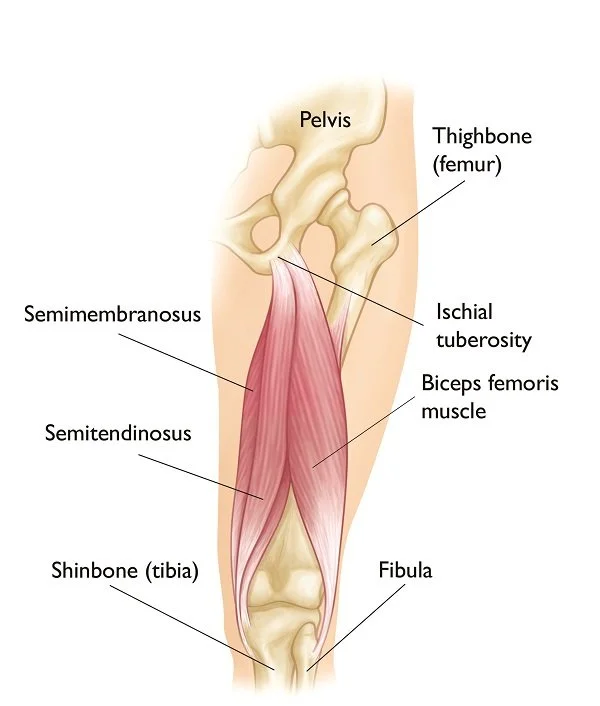
Image credited to OrthoInfo
What are the Muscle Actions and Function of the Hamstrings?
The hamstrings cross both the hip and knee joints, so they act on both of these areas. The following are the actions of the hamstring muscles:
All of the hamstring muscles primarily work to bend the knee
All of the hamstring muscles primarily work to extend the hip
The semitendinosus and semimembranosus muscles assist with internally rotating the lower leg when the knee is flexed
The biceps femoris assists with externally rotating the lower leg when the knee is flexed
The hamstrings have multiple different functions for the body as follows:
Bending the knee, which is important for walking, running, negotiating stairs, jumping, etc.
Extending the hip, which helps with standing up from a chair, picking objects up from the ground, walking, running, etc.
Provide stability to the pelvis, along with the glutes and core muscles, with activity.
Deceleration during running and fast-paced activities to slow the leg down and prevent excessive movement forward
What are Common Causes of Hamstring Tightness?
Prolonged Sitting
Sitting for long hours keeps the hamstrings in a shortened position. When a muscle is kept in a position that is not neutral, whether it’s being shortened or lengthened, this can lead to tightness of the muscle due to increased tension in this sustained position.
Muscle Imbalance
When one muscle is weaker than another, the stronger muscle often compensates. For example, if the glutes are weak, the hamstrings may take over, becoming overactive and tight as a result.
Nerve Tension
Like muscles, nerves need to be able to move too. Irritation or poor mobility of the sciatic nerve, which goes along the back side of the leg, can create the feeling of tightness in the hamstrings. Please refer to the previous blog to learn about sciatica!
Muscle Injury or Strain
Following a strain or injury to the hamstrings, the muscles tend to tighten as a way of protecting the body. If the muscles are guarding due to injury, then we will compensate with other nearby muscles in response. Following a muscle strain, it is extremely important to see a physical therapist as soon as possible to recover appropriately.
Postural Imbalances
When our pelvis is tilted forward, this causes the hamstrings to be in a chronically lengthened state due to them attaching to the back side of the pelvis and being pulled upward.
When our pelvis is tilted backward, this causes the hamstrings to be in a chronically shortened state due to them attaching on the back side of the pelvis and being pulled downward.
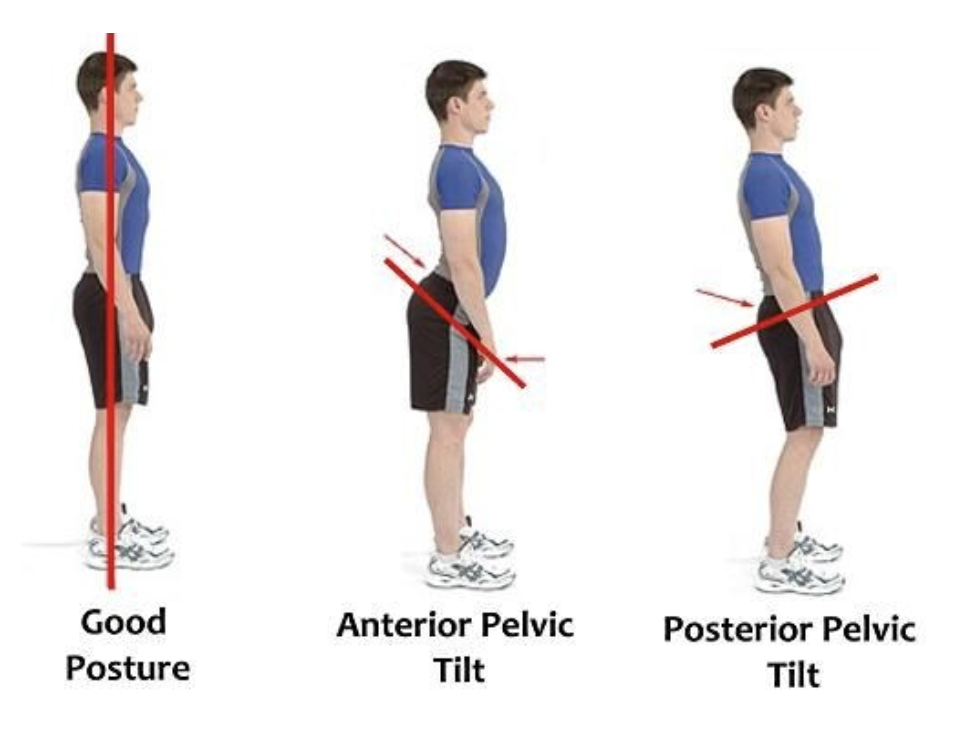
Pelvic tilt image credited to smartstrengthprogram.com
How Can Physical Therapy Help?
A thorough assessment by a physical therapist will discover the underlying issues for why there is excess tension in the hamstrings or what is causing the feeling of hamstring tightness.
Manual treatment, including soft or deep tissue release, dry needling, cupping, functional mobilization, and other appropriate techniques will be used to make physical changes to the body to prevent symptoms and find optimal alignment of the body.
Exercises, including neuromuscular reeducation, strengthening, stability, nerve mobility, etc., will be provided with appropriate cueing to ensure full benefits of maintaining the physical changes from the manual treatment to allow the body to work efficiently and functionally day to day.
Education and a home exercise program personalized to each person so that one can continue to make changes throughout the week until their next session of physical therapy and to have a tool box of their own to utilize once therapy has been completed.
If you are experiencing any of the above, please do not hesitate to reach out to our Charlotte or Lake Norman physical therapy locations for any questions you may have or to get you started on your journey to recovery!