Dry Needling: What It Is, How It Works, and Why We Use It as a Tool
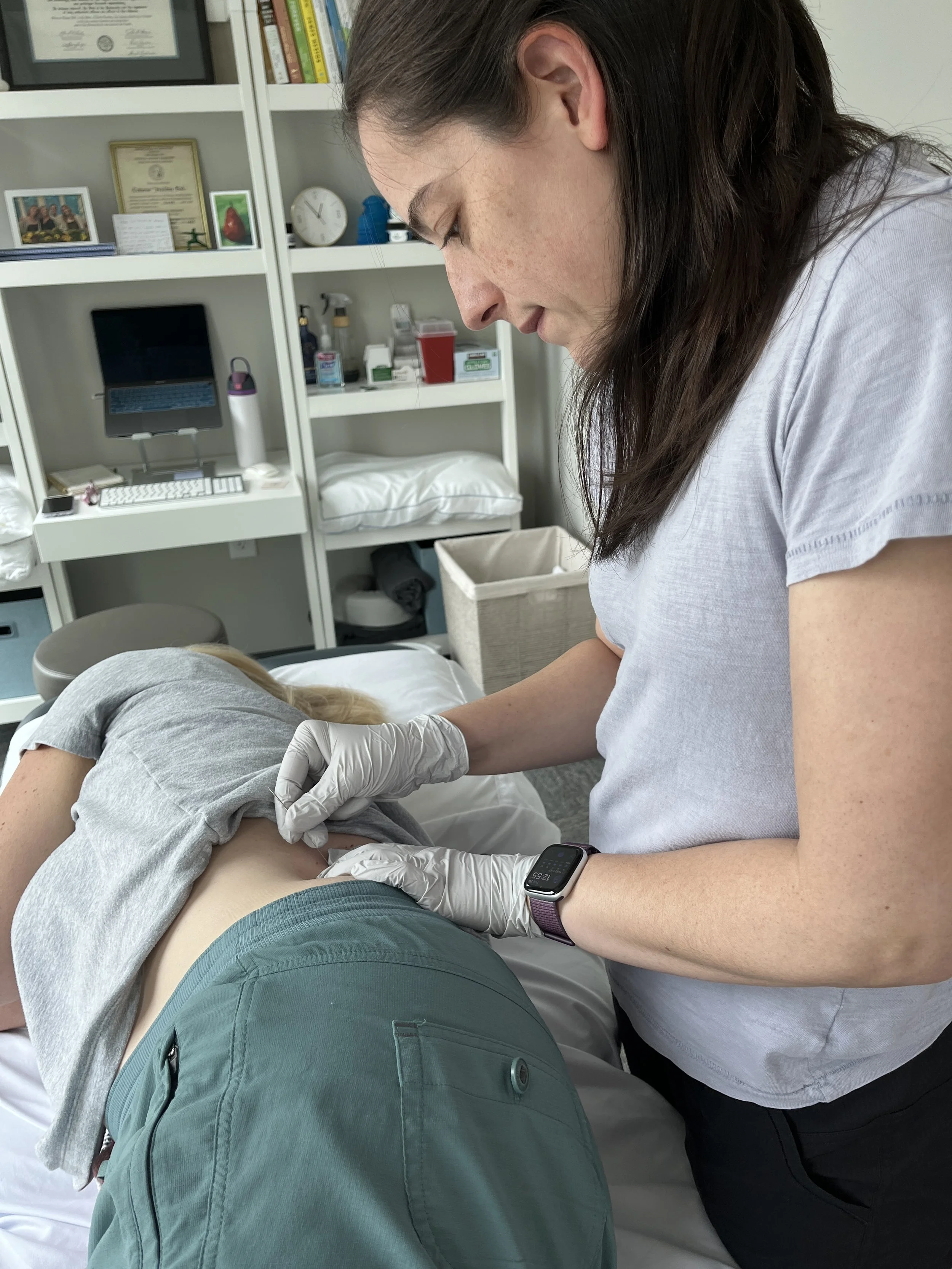
If you've ever dealt with a stubborn “knot,” a muscle that always seems tight, or an area that remains sensitive despite stretching or massage? Someone may have suggested dry needling, but what exactly does putting a needle into a muscle accomplish? Does it actually release a knot? Why can it sometimes make movement feel noticeably different? And if the relief is temporary, did the treatment really work?
Dry needling can be a valuable part of physical therapy, but perhaps the most important thing to understand is this:
Dry needling is a tool, not the treatment plan itself.
At Congruency Therapy & Wellness, we use dry needling when we believe the change it creates can help us move treatment forward. That may mean decreasing pain or sensitivity, reducing muscle guarding, or making a particular movement easier.
And then we build from there.
Because the change it creates is where the next part of treatment begins.
What Is Dry Needling?
Dry needling is a technique in which a trained physical therapist inserts a very thin, solid filament needle through the skin and into selected muscles or other tissues.
It is called “dry” needling because nothing is injected.
Physical therapists may use the technique to address pain, muscle sensitivity, movement limitations, or neuromusculoskeletal problems.
But the needle itself is only one part of the process.
Deciding whether to use dry needling, where to use it, and what to do afterward requires an understanding of anatomy, movement, pain, tissue loading, and the individual person in front of us.
Where Did Dry Needling Come From?
The history of dry needling helps explain both how the technique developed and why our understanding of it continues to evolve.
Dry needling did not begin as a stand-alone physical therapy treatment. Its development grew partly out of 20th-century efforts to better understand and treat muscular and myofascial pain.
Physician Dr. Janet Travell, followed by her work with Dr. David Simons, helped popularize the concept of myofascial trigger points. Trigger points are sensitive areas within muscles associated with local or referred pain.
Early treatments frequently involved injecting these painful areas with substances such as local anesthetics.
Eventually, clinicians began asking an interesting question:
Was improvement coming entirely from what was being injected, or could the needle itself be creating an effect?
In 1979, Czech physician Dr. Karel Lewit published an influential paper titled The Needle Effect in the Relief of Myofascial Pain. His work described pain relief following needling without the use of injected medication and helped advance interest in what became known as dry needling.
Over time, dry needling evolved beyond its early association with injections and became increasingly incorporated into musculoskeletal rehabilitation and physical therapy.
Our Understanding of Dry Needling Has Evolved, Too
The history is important because early explanations of dry needling focused heavily on trigger points.
You may still hear the technique described as finding a knot, putting a needle into it, making the muscle twitch, and “releasing” the trigger point.
That is an easy explanation to visualize.
The actual science appears to be more complex.
Researchers continue to investigate what trigger points represent biologically and exactly how dry needling produces its effects. Modern theories look beyond a simple mechanical “release” and consider interactions among the local tissue, peripheral nerves, spinal cord, brain, and broader pain-processing system.
In other words, we probably shouldn't think of dry needling as simply using a needle to break up a knot.
Instead, several effects may be occurring at the same time.
So How Might Dry Needling Work?
There isn't one universally accepted mechanism that explains every response to dry needling.
Instead, researchers have proposed several overlapping mechanisms.
1. It May Create Local Changes in the Tissue
Introducing a needle provides a mechanical stimulus to the area being treated.
When certain sensitive areas of muscle are needled, you may experience a brief involuntary contraction called a local twitch response.
Historically, producing this twitch was considered an important component of trigger-point dry needling.
Today, we know the story is more complicated. Producing a twitch does not necessarily determine whether treatment will be successful.
Researchers are also investigating whether needling can temporarily influence local blood flow, chemical mediators, muscle tone, tissue stiffness, and sensitivity.
2. It May Change How the Nervous System Processes Pain
Pain isn't generated by muscles and joints alone.
Your experience of pain involves communication between your tissues, nerves, spinal cord, brain, and the broader nervous system.
Dry needling introduces a new sensory stimulus into that system.
That stimulus may temporarily change how the nervous system processes information coming from an uncomfortable area. This may help explain why some people notice that an area not only feels different after dry needling, but that it also moves differently.
3. It May Create an Opportunity for Better Movement
This is where dry needling becomes particularly useful within physical therapy.
Imagine shoulder pain has made it difficult to raise your arm comfortably.
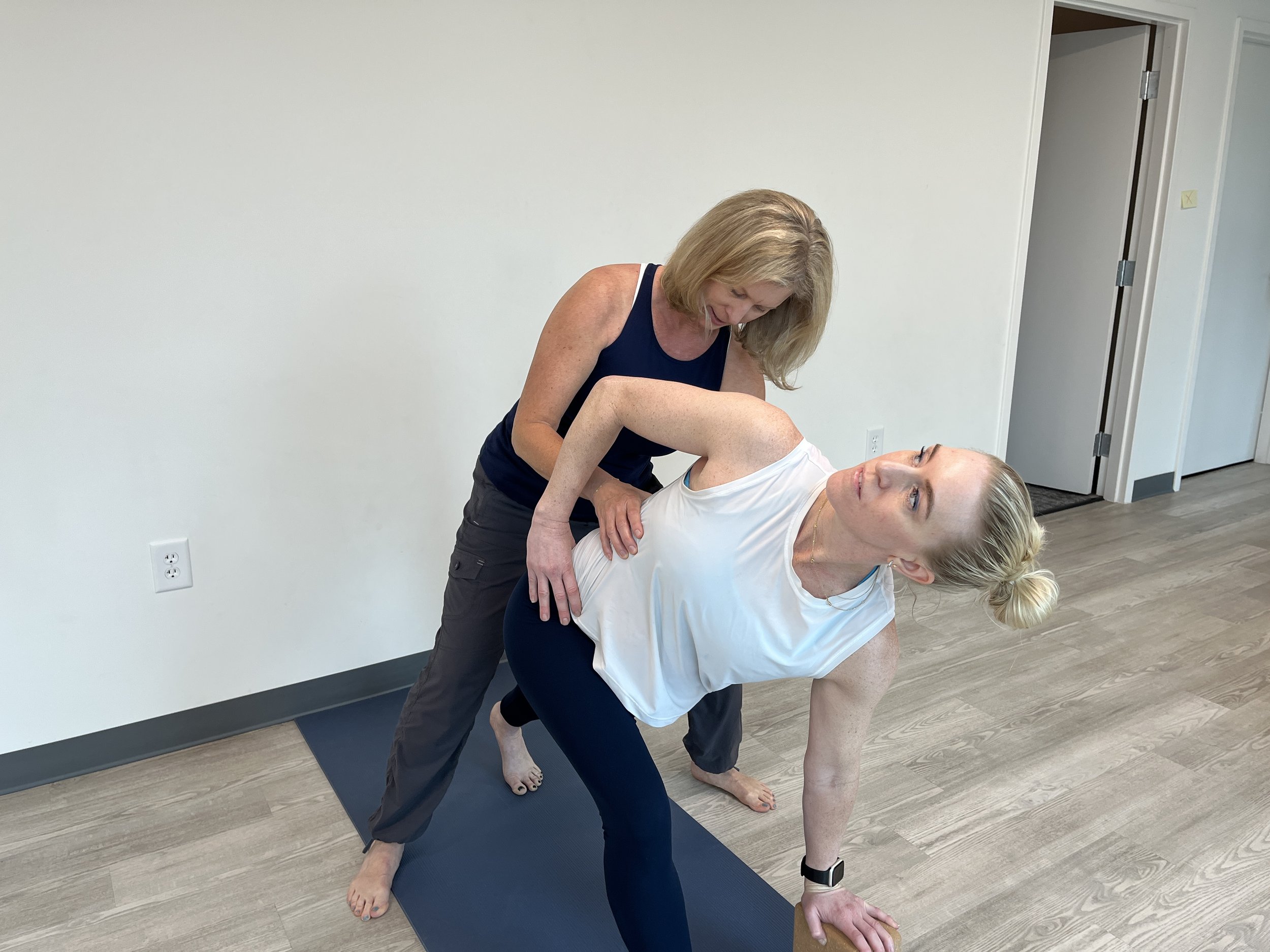
If dry needling decreases the sensitivity or guarding around the shoulder and suddenly reaching overhead feels easier, we've created an opportunity.
Now we can work on shoulder mechanics, thoracic mobility, strength, coordination, or whatever other factors we identified during your evaluation.
The needle didn't necessarily “fix” the shoulder.
Instead, it may have helped create an environment where movement became easier to access.
The change it creates is where the next part of treatment begins.
What Does Dry Needling Feel Like?
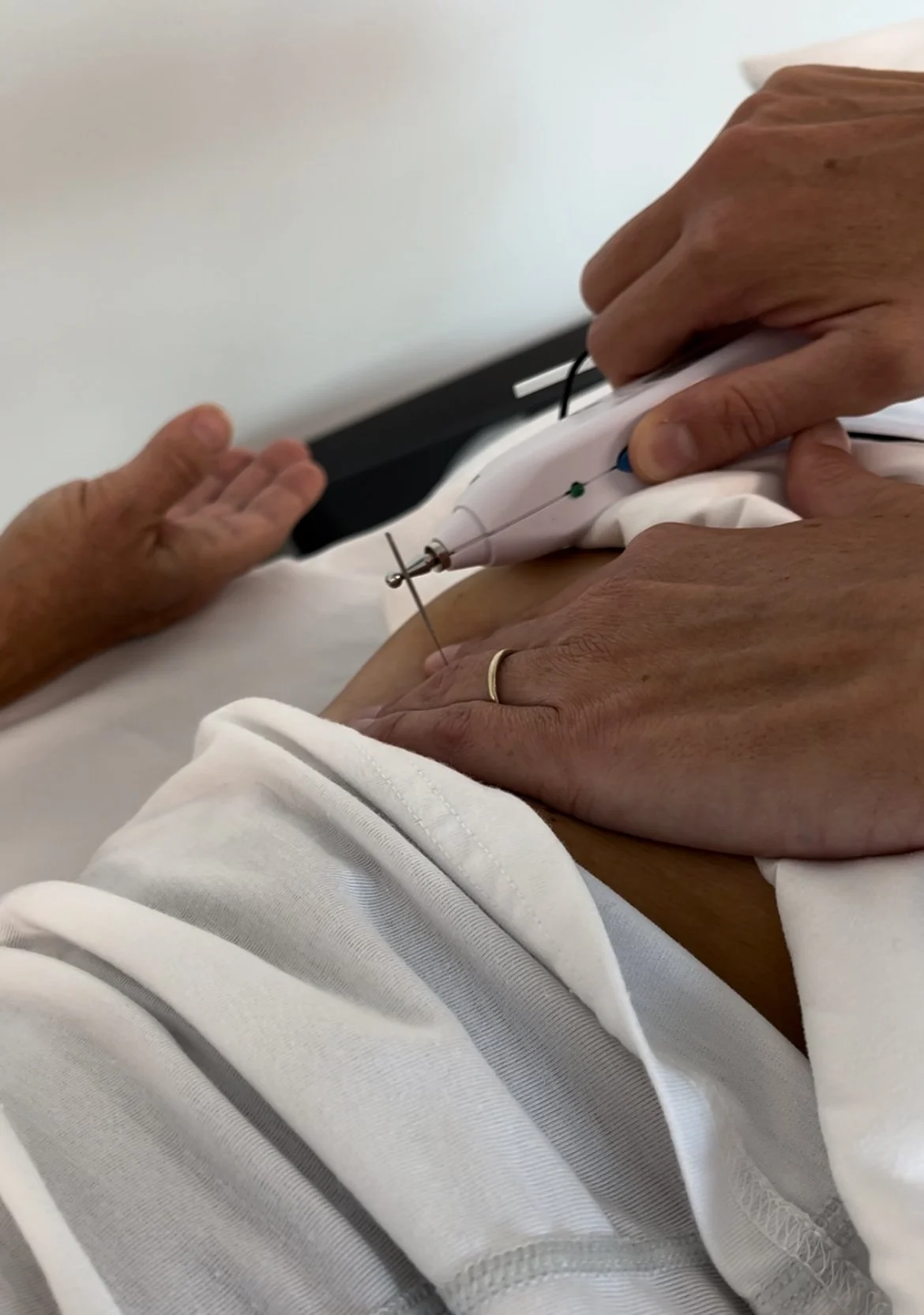
The initial insertion of the needle is often minimally noticeable.
When a sensitive area is reached, however, you may experience a brief twitch, cramping sensation, ache, or pressure. Some people experience temporary soreness afterward that feels similar to post-workout muscle soreness.
Responses vary.
Your physical therapist should explain what to expect before treatment and communicate with you throughout the process.
And dry needling is always optional.
If you're uncomfortable with needles or another treatment strategy makes more sense, there are many other ways to address pain and movement limitations.
What Problems Can Dry Needling Help Address?
Dry needling may be considered when pain, muscular sensitivity, or guarding appears to be contributing to someone's limitations.
· A persistent “knot” or sensitive area
· Muscles that constantly feel tight or guarded
· Pain reproduced by pressing on a particular area
· Difficulty moving comfortably through a certain range
· Muscular pain during exercise or repetitive activity
· Symptoms that improve temporarily with massage or stretching but continue returning
· Pain that seems to travel or be felt somewhere other than its apparent source
Dry needling is used in physical therapy for many musculoskeletal presentations, including some cases of low back pain, neck pain, shoulder pain, and knee-related symptoms.
That doesn't mean everyone with one of these problems needs dry needling.
Two people can have nearly identical symptoms and require very different treatment plans.
Why Does the Tightness Keep Coming Back?
This may be an even more important question than whether dry needling can make the tightness feel better.
Imagine someone who repeatedly experiences upper trapezius tightness.
Dry needling may decrease the sensitivity of that muscle and make the neck or shoulder feel significantly better.
But why was the muscle becoming irritated in the first place?
· Neck and thoracic mobility
· Rib cage movement
· Shoulder mechanics
· Breathing strategy
· Shoulder strength and endurance
· Work or training demands
· How frequently the area is being loaded
· Recovery and sleep
· Nervous system sensitivity
The same principle applies elsewhere.
Recurring calf tightness in a runner may involve ankle mobility, foot mechanics, hip strength, running volume, recent training changes, or whether the calf has enough capacity for the demands being placed on it.
Treating the sensitive area may help.
Understanding why it keeps becoming sensitive is often what moves treatment forward.
Myth: “If a Muscle Feels Tight, That Muscle Must Be the Problem”
Not necessarily.
A muscle can feel tight for many reasons.
It may be working harder than it currently has the capacity to tolerate. It may be compensating for limited movement somewhere else. It may be responding to an unfamiliar training load. Or the nervous system may have become more protective or sensitive around the area.
That is why simply chasing tight muscles doesn't always produce lasting results, and why a thorough evaluation from a physical therapist that looks at the whole body as a unit is essential.
The place where you feel symptoms gives us important information, but it doesn't always give us the entire answer.
Is Dry Needling Better Than Hands-On Treatment?
Not necessarily, and it doesn't have to be.
Physical therapy isn't a competition between techniques. Dry needling, myofascial techniques, manual therapy, movement retraining, and exercise all play different roles depending on the individual.
Current research suggests that dry needling can reduce musculoskeletal pain, particularly in the short term. An umbrella review published in the Journal of Clinical Medicine found dry needling generally performed better than sham or no intervention for short-term pain reduction, while being roughly comparable with other interventions. It also noted that dry needling may provide additional value when combined with other physical therapy interventions.
That last point is especially relevant to how we practice at Congruency.
We aren't trying to determine which technique “wins.”
What does this person need right now to help them make progress?
Sometimes dry needling is that tool.
Sometimes it is manual therapy.
Sometimes the most important intervention is loading the tissue, building strength, improving coordination, or changing how someone moves.
Often, it's a thoughtful combination.
Dry Needling is Part of Comprehensive Physical Therapy Approach
This is where our approach to dry needling fits into the larger Congruency philosophy.
Pain rarely exists in isolation.
Mobility, strength, coordination, previous injuries, training demands, sleep, recovery, stress, and the nervous system can all influence how someone experiences pain and how well their body tolerates activity.
So rather than beginning with:
“Which muscle should we needle?”
We begin with:
“What is keeping this person from doing what they want to do?”
Then we determine what tools can help us get there.
If dry needling allows for improvements in symptoms as well as mobility, great! The next question becomes: what do we need to do to help that improvement stick?
Maybe we load the tissue through specific exercise so it can tolerate more demand.
Maybe we retrain a movement pattern that was previously compensating for the painful area.
Maybe we work on mobility somewhere else in the system that was contributing to the overload.
Maybe we build stability and strength around the region so it can better support the work it’s being asked to do.
The goal isn't to become dependent on dry needling every time the muscle feels tight.
The goal is to help your body become increasingly capable of handling the things you ask it to do.
When Should You Consider Seeing a Physical Therapist?
It may be time to see a physical therapist if pain, tightness, or movement limitations are starting to interfere with how you want to live, train, or function, and you’re not sure how to resolve it on your own.
You don’t need to already know whether dry needling is appropriate. In fact, that decision should come after a thorough evaluation.
A physical therapy visit is the right place to discuss dry needling if you are experiencing:
· Pain or tightness that keeps returning despite stretching, massage, or rest
· A specific area of muscle sensitivity that limits movement, exercise, or daily activity
· Symptoms that temporarily improve but never fully resolve
· Ongoing uncertainty about why a region always feels “tight” or guarded
· Difficulty progressing in strength or activity because symptoms keep flaring up
During your evaluation, your physical therapist will determine what is contributing to your symptoms and whether dry needling is likely to help create a meaningful change in pain, sensitivity, or movement.
If it is appropriate, we’ll explain exactly why we’re considering it and how it fits into your overall plan. If it’s not the right tool, we’ll use other strategies that better match your needs.
Whether you're looking for physical therapy near Myers Park, Dilworth, or SouthPark in Charlotte, or Lake Norman physical therapy in Cornelius, Davidson, or Huntersville, the starting point should be understanding the problem, not choosing a technique before your evaluation.
Dry Needling Is a Tool, but It Is Only One Part of the Overall Treatment Process.
At Congruency Therapy & Wellness, we always use it with intention and with a clear plan for what comes next. Feeling different after dry needling can create a meaningful change in your body. But what matters most is that you are able to do more of what you want to do because of that change. That is what we are really after.
If you'd like to learn more, explore our Dry Needling service or read about our approach to Low Back Pain, Neck Pain, and Shoulder Pain.
You can also learn more about Congruency Therapy & Wellness's physical therapy services in Charlotte and Lake Norman and how we combine advanced clinical skill with individualized, intentional care.
Kelsey Hight, PT, DPT, COMT