Low Back Pain: Causes, Posture, Movement, and Physical Therapy
Low Back Pain and Physical Therapy
Low back pain is one of the most common complaints we treat at Congruency Therapy & Wellness. Back pain can be disruptive to everyday life, limiting your ability to work, exercise, travel, or do the things you enjoy.
Some clients worry they may have damaged a structure in the spine, while others believe back pain is simply a normal part of aging. While some low back pain is related to structural changes in the spine, such as disc herniations or spinal stenosis, many low back problems are also influenced by posture, movement patterns, strength, mobility, and how the body manages load.
If you sit or stand for prolonged periods and experience low back pain, those prolonged positions may be contributing to your symptoms.
What Structures Are in the Low Back?
The low back includes the lumbar spine and the back of the pelvis. The lumbar spine is made up of five lumbar vertebrae, with thick cartilaginous discs between them and ligaments that help support the joints of the spine.
The back of the pelvis includes the sacrum and the ilia, the bones that form the sacroiliac, or SI, joints. Muscles attach to these bones to provide stability and create movement, while fascia surrounds and connects tissues and assists with load transfer throughout the body.
Understanding these structures is useful, but identifying a single painful structure does not always tell the whole story. How the spine, pelvis, hips, and surrounding tissues work together can influence how forces are distributed through the low back.
What Causes Low Back Pain?
There are several diagnoses associated with low back pain, and symptoms can have different contributing factors.
Back pain can occur with a muscle strain, sometimes related to inefficient loading or a sudden increase in activity. A disc herniation may contribute to low back pain and, in some cases, pain, numbness, or tingling that travels into one leg.
Changes in the spine may also be associated with arthritis, spinal stenosis - narrowing of spaces within the spine - or spondylolisthesis, in which one vertebra shifts relative to another.
But a diagnosis or imaging finding is only one part of the picture. Your movement patterns, mobility, strength, posture, activity level, work demands, exercise habits, and previous injuries may all influence how your back feels and functions.
Our bodies are designed to move and change positions frequently. As a culture, many of us sit throughout the workday, sit in a car during the commute, and sit again at home to relax.
A standing desk may be helpful for some people, but it is not a silver bullet. Prolonged standing can also lead to fatigue. Rather than searching for one perfect position, the body often benefits from periodically moving and changing positions throughout the day.
How Can Low Back Pain Be Managed Conservatively?
Physical therapy can help determine what may be contributing to your low back pain and which factors can be changed.
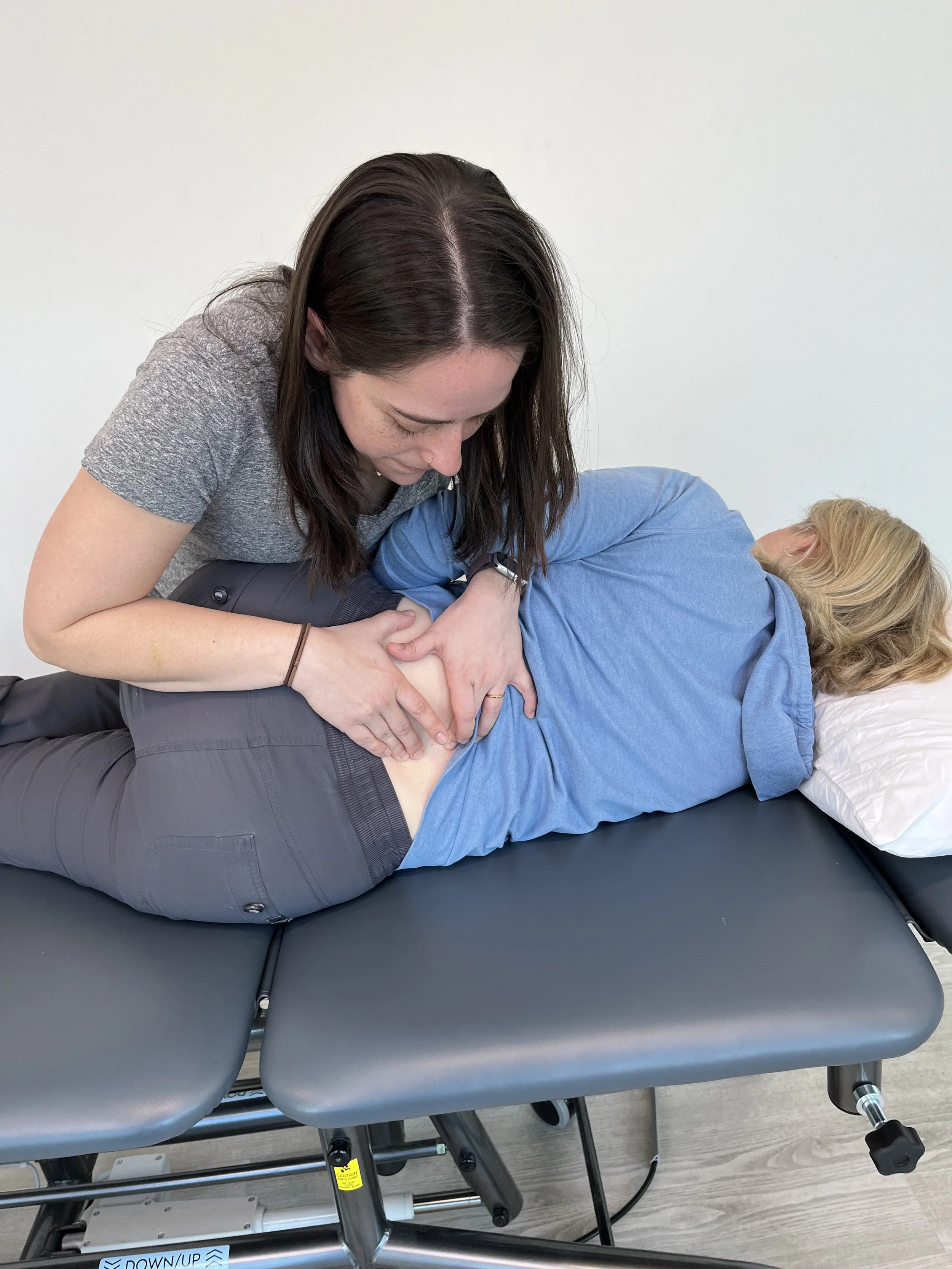
At Congruency, your physical therapist evaluates more than the location of your symptoms. We look at how your spine, pelvis, hips, and surrounding regions move and how your body manages the activities that matter to you.
If your symptoms appear musculoskeletal, your therapist will develop an individualized plan of care based on what they find.
Treatment may include hands-on care, movement retraining, mobility work, progressive strengthening, and strategies for managing the demands of your daily activities.
Depending on your presentation, Dry Needling or Myofascial Release may also complement your treatment plan.
Adding more movement to your daily life can also be valuable. Moving your joints regularly through the ranges available to you helps prevent prolonged periods in any single position.
Core activation can provide additional support for the spine. Your Congruency physical therapist can help you learn how to effectively recruit your core before progressing to more challenging strengthening exercises.
Can Better Posture Help Low Back Pain?
A Congruency physical therapist can help you find more efficient positions and strategies that may decrease unnecessary stress through your low back.
Many of us have been told to sit or stand with our shoulders down and back and our chest lifted. But posture is not one-size-fits-all.
Each person develops different postural strategies and compensations. Instead of forcing everyone into the same position, your therapist can identify what helps your body distribute load more efficiently.
One way we assess this is by testing your ability to withstand a downward force. After making a specific postural correction, your therapist can repeat the test. Clients are often surprised by how much more force they can support when their body is positioned more efficiently.
For some people, symptoms may also decrease when posture and load distribution improve.
How Can I Improve My Movement Patterns?
It is entirely possible to change the way you move. It simply takes practice.
A Congruency physical therapist can observe you during functional and sport-specific movements and identify areas where you may be compensating or using more effort than necessary.
This might include how you squat, bend, lift, walk, run, rotate, exercise, or perform movements specific to your sport.
Your therapist can then provide hands-on guidance and specific feedback to help you find a more efficient strategy. You will practice these patterns as part of your home program, and your therapist will reassess your progress during each visit.
As your movement becomes more efficient, exercises can be progressed to build the strength and capacity needed for the activities you want to return to.
For golfers experiencing low back pain with rotation, practice, or play, our Golf Performance may also help identify movement factors contributing to symptoms.
Physical Therapy for Low Back Pain in Charlotte and Lake Norman
Low back pain does not always require you to stop doing the activities you enjoy. The first step is understanding what is contributing to your symptoms and how your body is responding to movement and load.
Congruency Therapy & Wellness provides individualized physical therapy for low back pain at our Charlotte and Lake Norman/Cornelius locations. We work with active adults throughout Myers Park, Dilworth, Eastover, Cotswold, SouthPark, Davidson, Huntersville, Denver, Mooresville, and the surrounding communities.
Our goal is not simply to help your back feel better today. We want to help you understand your body, improve the way it moves, and build the capacity to confidently return to the things you want to do.
Julianna Hane, PT, DPT