Why Your Golf Swing Feels Stuck: The Mobility Behind a Powerful Turn
If you've ever finished a round feeling like your swing had a ceiling on it — like your body simply wouldn't turn as far as your brain wanted it to — you're not imagining it. For most golfers, the limiting factor in swing power isn't strength, and it isn't technique alone. It's mobility. Specifically, how well your thoracic spine, hips, and shoulders rotate against each other to create the coil that powers a backswing and unwinds through a follow-through.
At Congruency Therapy & Wellness, we work with golfers throughout Charlotte — from weekend players in Myers Park to competitive amateurs in Eastover — who've hit a version of this wall. They've had lessons. They've watched the swing videos. But their body isn't giving their swing anywhere to go.
What “the turn” actually requires
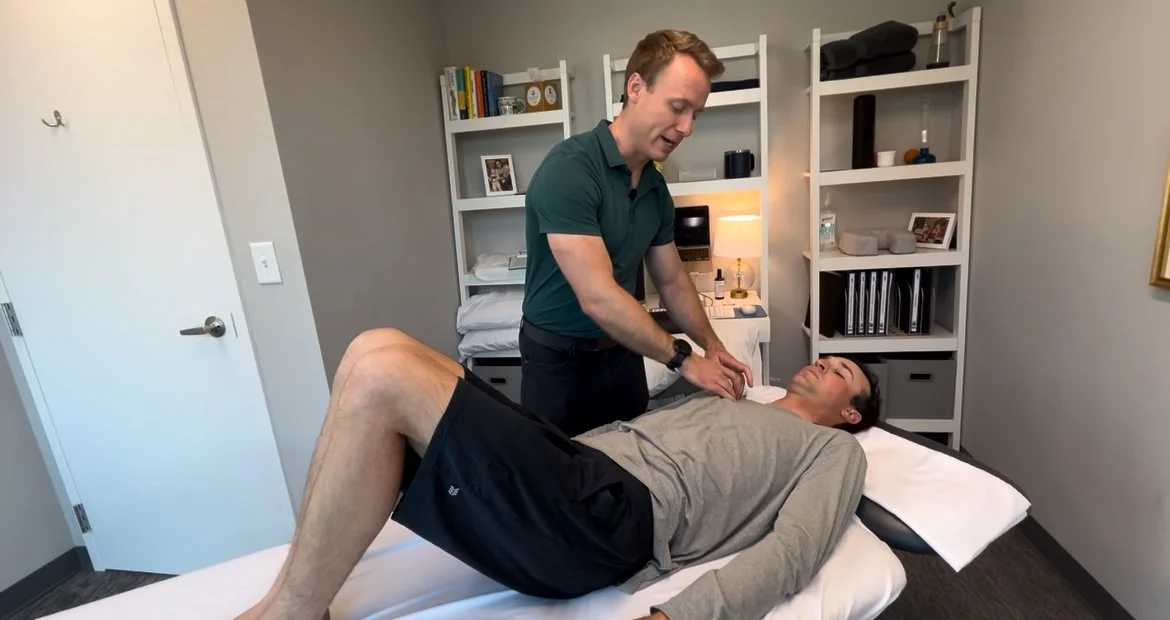
A golf swing's power comes largely from what's often called the X-Factor: the separation between hip rotation and shoulder rotation at the top of the backswing. The bigger that separation, the more elastic energy is stored and released through impact. Creating that separation efficiently and safely depends on a few key areas of the body working together:
Thoracic spine rotation — your mid-back needs to rotate independently of your lumbar spine. When it can't, your low back often takes over the rotation it was never built to handle.
Hip internal and external rotation — your lead hip needs to rotate freely on the backswing, and your trail hip needs the same on the downswing. Restricted hip rotation is one of the most common mobility deficits we see in golfers.
Shoulder and scapular mobility — particularly external rotation on the trail arm and internal rotation on the lead arm, both of which are essential for a full, controlled backswing.
Ankle and hip stability — the base that allows all of that rotation to happen without your lower body sliding or losing its footing.
When one of these areas is restricted, the body doesn't just lose distance — it compensates. And compensation is where a lot of golf-related pain begins.
Why the same golfers keep getting hurt (or keep losing distance) year after year
A tight thoracic spine doesn't just limit your turn — it forces your low back to rotate more than it was designed to, which is a well-documented contributor to low back pain in golfers. A stiff lead hip changes how force transfers through the downswing, often loading the front knee or low back instead. A restricted shoulder can create compensatory patterns in the neck.
This is why golf-related pain so often shows up somewhere other than where the actual restriction lives. The low back hurts, but the real issue is a thoracic spine that stopped rotating years ago. The shoulder aches, but the deeper problem is a scapula that isn't gliding the way it should. Treating only the painful area, without addressing the mobility restriction driving the compensation, tends to produce short-term relief and long-term repeat visits.
This is also why the issue tends to persist even after golfers stretch on their own, foam roll, or take time off. Generalized stretching can improve tissue flexibility, but it doesn't restore the specific joint mechanics — the glide, spin, and roll within a joint — that manual therapy is designed to address. If the joint itself isn't moving correctly, stretching the muscles around it only goes so far.
A holistic view: it's rarely just one joint
The body doesn't function in isolated parts, and neither does a golf swing. A hip that won't rotate can be connected to an ankle that lost mobility after an old sprain. A thoracic spine that won't turn can be tied to breathing patterns and rib cage mechanics. A shoulder that aches at the top of the backswing might trace back to how the neck and upper back are moving — or not moving — together.
This is the lens we bring to golf performance work at Congruency: rather than isolating the joint that hurts, we look at how the whole kinetic chain — ankles, hips, spine, shoulders, and neck — is working together (or working against itself) through the swing.
Common myths worth clearing up
“I just need to stretch more before I play.” Pre-round stretching can help with warm-up, but it rarely resolves a true joint restriction. If a joint's mechanics are off, stretching the surrounding muscles is treating the symptom, not the cause.
“My swing coach can fix this.” Swing coaches are essential for technique, timing, and mechanics — but they aren't trained to assess or treat joint restrictions. The best outcomes we see are golfers working with both a swing coach and a manual therapy provider, each addressing a different piece of the puzzle.
“Golf pain is just part of getting older.” Reduced mobility is common with age, but persistent restriction and compensation-driven pain are not something you have to accept. In many cases, mobility that's been “lost” for years can be meaningfully restored.
When it makes sense to get help
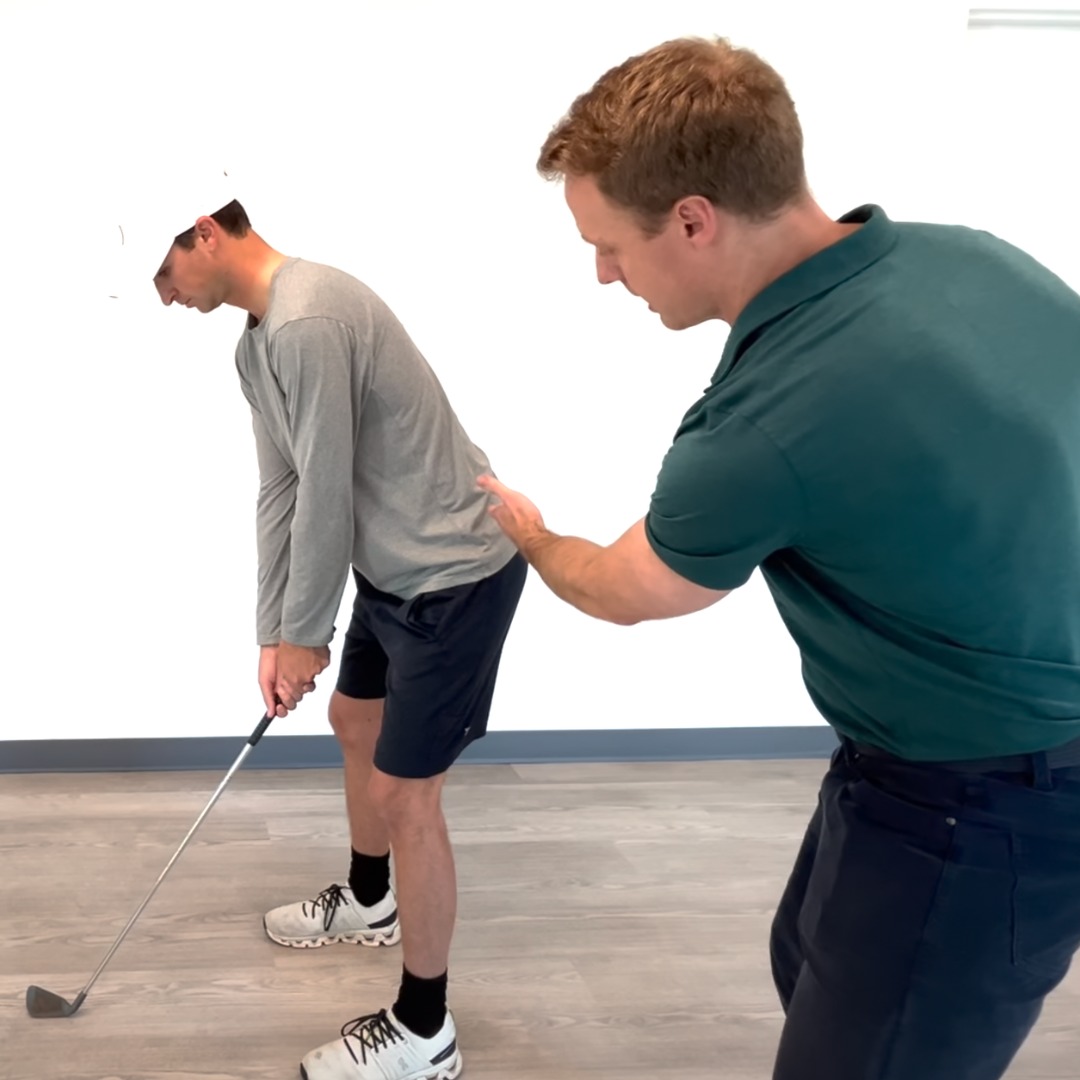
If you've noticed your turn getting shorter over the seasons, if you feel a hard stop somewhere in your backswing, if you've had recurring low back, hip, shoulder, or neck discomfort during or after golf, or if you've simply hit a plateau in distance that technique changes alone haven't fixed — these are strong signals that a mobility restriction, not a swing flaw, may be the real limiting factor.
Research from organizations like the Titleist Performance Institute has consistently linked specific physical limitations — such as restricted hip rotation and limited thoracic mobility — to common swing faults and injury patterns, reinforcing that assessing the body is just as important as assessing the swing itself.
Where to go from here
If any of this sounds familiar, it may be time to look at what your body is — and isn't — allowing your swing to do. Our Golf Performance Physical Therapy approach at Congruency combines a whole-body movement assessment with hands-on manual therapy to restore the specific mobility your swing depends on. If pain in a particular area is your primary concern, our Low Back Pain, Neck Pain, Shoulder Pain, and Knee Pain pages go deeper into how we approach those specific issues in golfers and non-golfers alike.
To learn more about how Congruency blends elite clinical skill with intentional, whole-person care for clients across Charlotte, Cotswold, and SouthPark, visit our Services page.
Travis Gerrald, PT, DPT, CFMT, TPI Certified